13 - 15 April 2027Crocus Expo — Moscow


Co-located with
What is changing in the industry in 2026 and why these trends directly affect manufacturers, suppliers and buyers of electronics.
2026 was a turning point for the Russian electronics industry: requirements for domestic products are being tightened, a technological fee is being introduced, electronics prices are rising, and the state is launching industry support programs with a budget of more than 250 billion rubles. Below are the main trends, challenges and opportunities for market participants.
By 2025, the main players have gained a foothold in their niches, many devices are still assembled thanks to parallel imports, and the dependence on the foreign x86 architecture remains tangible. According to CNews Analytics, in 2-3 years, Russian products have taken a dominant position in the regulated segment of public procurement - up to 70-80%, depending on the category of equipment.
In 2026, the market faced an increase in electronics prices by 25-50% and the total volume of the industry over 4 trillion rubles. Among the key factors are the introduction of a technology fee, an increase in VAT, the labeling of electronics and a global shortage of memory modules due to the demand for AI infrastructure.
 |  |
From January 1, 2026, the requirements for domestic products have become stricter: the passing score for laptops and tablets has increased from 140 to 148, and the main criterion for domestic products is still determined by Government Decree No 719. It is important for the state that development centers and all rights to technologies are located within the country.
If earlier points were awarded mainly for the final assembly, documentation and service, then from 2026 SSD drives and memory modules are in the crosshairs of the regulator. Points are awarded for mounting, flashing and testing components, and the point requirements for memory will increase annually until 2030. The time when foreign memory could simply be inserted into the "Russian corpus" is coming to an end.
One of the key events of the year was the introduction of a technological fee. According to the Ministry of Industry and Trade, the start of charging the fee is planned from September 1, 2026 (the postponement to December 1, 2026 is being discussed). The fee is paid when importing or producing within the country an electronic component base and industrial products containing an electronic component base. The maximum payment amount is no more than 5 thousand rubles.
According to the forecasts of the Ministry of Finance, in 2026-2028, budget revenues from the levy will amount to about 218 billion rubles:
2026 - about 20 billion rubles;
2027 — 88 billion rubles;
The funds will be used to support domestic producers, and since the fee will be returned to Russian producers, this reduces the risks of a sharp rise in prices.
Technological Directions of the Next Years
In the coming years, the market will develop in several key areas:
Compute disaggregation – new options for fault tolerance and scalability.
Artificial Intelligence – Growing demand for AI storage and infrastructure.
At the same time, Russian companies, including state-funded organizations, often choose products from China: they combine relatively low cost with sufficient productivity. This creates an additional competitive environment in which domestic electronics must prove their real technological value.
Barriers that determine the shape of the market in 2026:
Shortage of components and rising prices. The global shortage of memory modules and the high demand for AI infrastructure are making Russian laptops, PCs and smartphones more expensive.
Strict regulation of documentation. To obtain the status of a domestic product, it is necessary to draw up documentation strictly according to the ESKD, store all sources in Russia and confirm that the rights to the design documentation and software belong to a Russian legal entity.
Relatively simple elements are already available in domestic versions, while complex products, according to market leaders, require significant investment and several more years of work.
In 2026, the Ministry of Industry and Trade is implementing more than 20 projects as part of the program for the development of electronic engineering. The goal is to achieve the level of import substitution of about 70% of equipment and materials for microelectronics by 2030. The projects include plants for wafer grinding and polishing, ion beam etching, molecular beam epitaxy and gas production.
At the same time, the Government of the Russian Federation in 2026-2028 will allocate over 250 billion rubles from the federal budget for the development of the electronics industry. The money will be used to support manufacturers, develop new technological processes and train personnel - this is a stable fund for the long-term development of the industry.
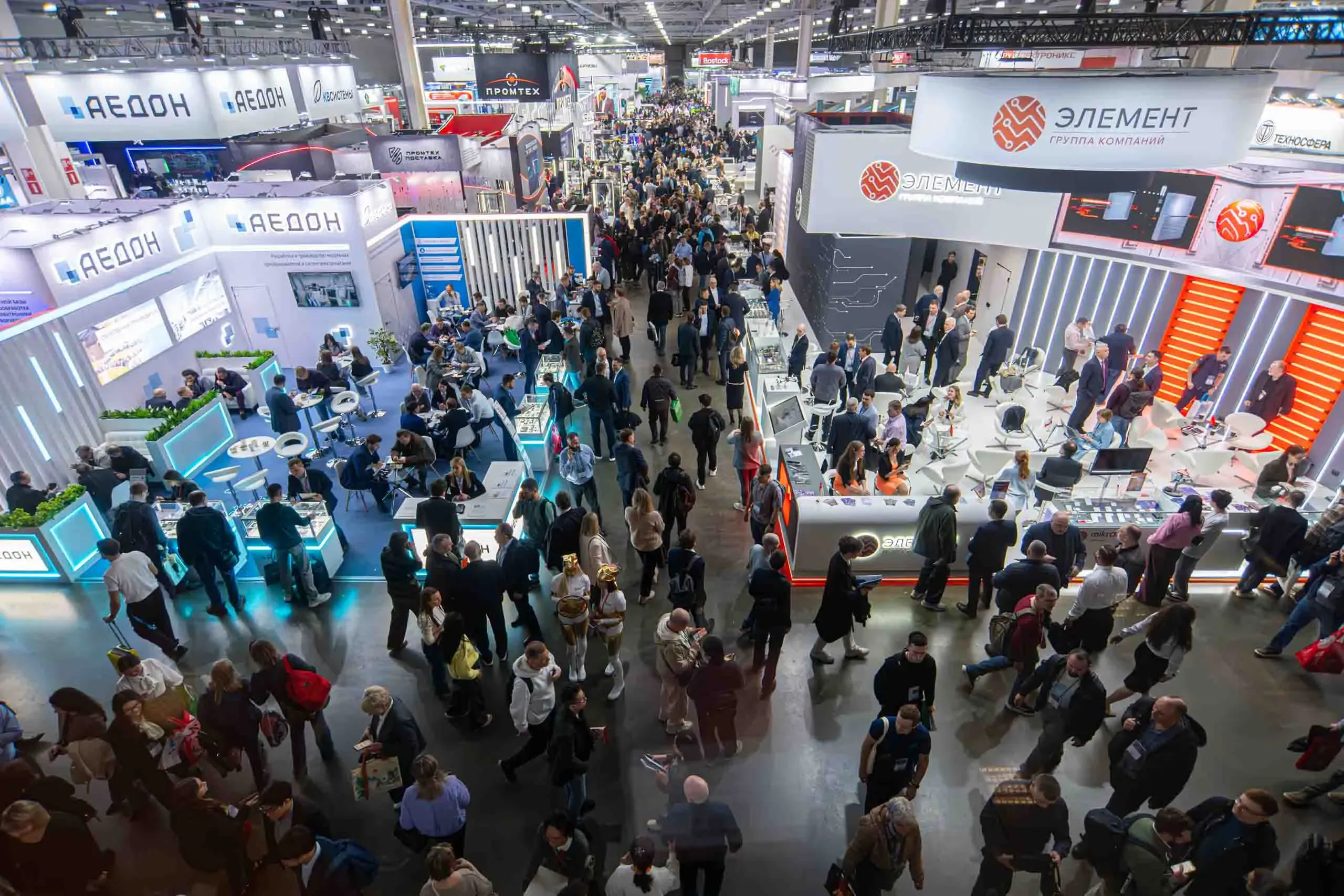 |  |
ExpoElectronica 2027 will be held on April 13–15, 2027 in Moscow, Crocus Expo IEC, as part of the ExpoElectronica ecosystem | ExpoCifra. If your business is related to electronic components, technologies and equipment for the production of electronics, embedded systems, robotics or industrial automation, this is the main industry platform to present your products and solutions to the target audience.